Finding character in a simple shape
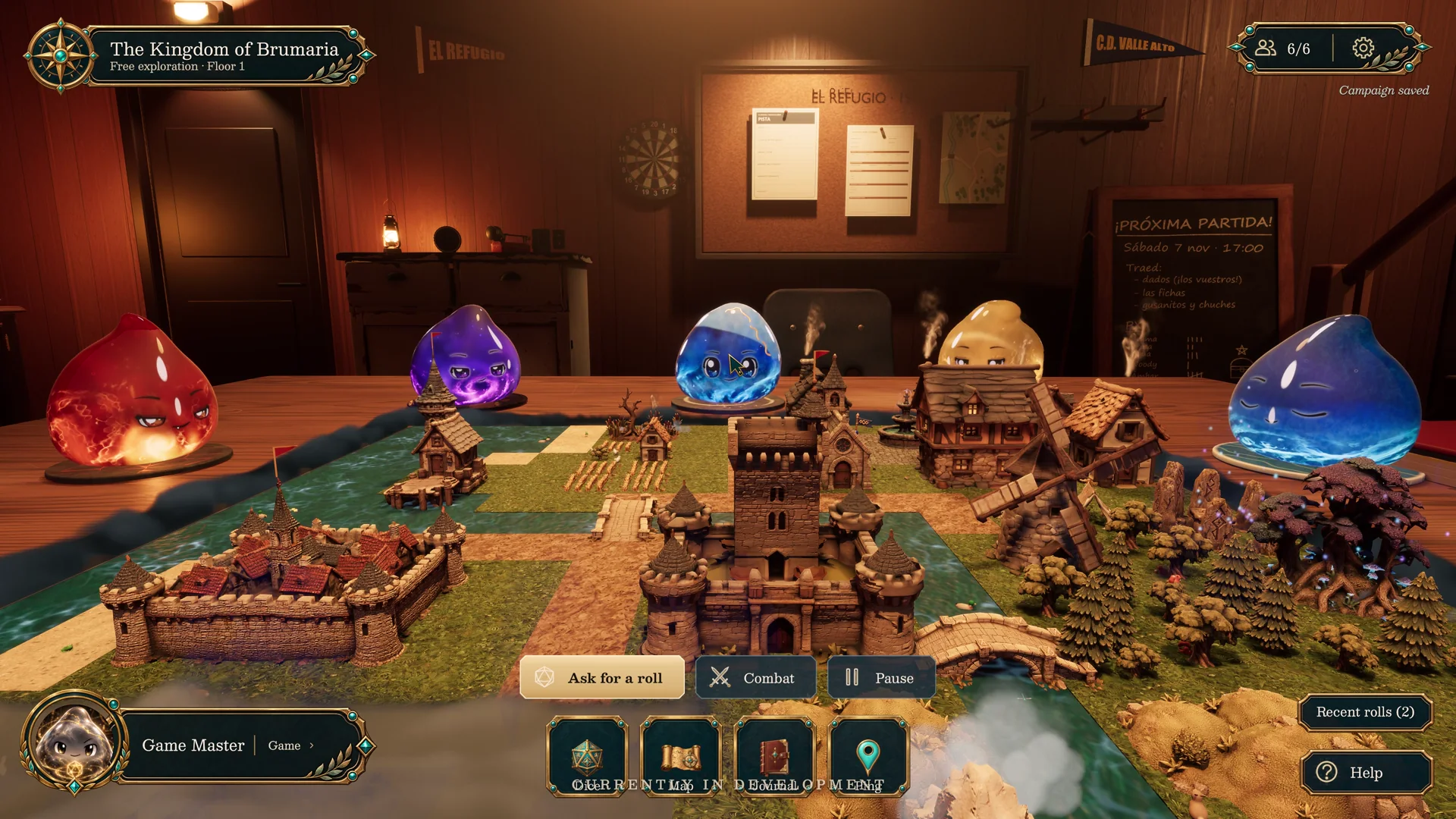
While designing the creatures, we kept coming back to one question: how much does a character need to be recognizable? That search led us towards slimes, with rounded bodies, clear silhouettes and few external details. We wanted to keep their curiosity and personality while simplifying how we bring them into the game.
This decision also reflects how we work. Simple geometry lets us focus our effort on volume, surfaces and expressions. Every detail needs to contribute something. The crest, the eyes and the proportions of the body carry more weight when they are not competing with armor or a collection of accessories.
A little world inside
Elemental identities give us another way to distinguish the creatures. Water, fire, plant life, light and darkness suggest different colors and movements. We want to explore those elements as something living inside each slime: currents, reflections, embers and shifts in light that accompany their presence at the table.
The visual direction combines surfaces that have depth with drawn faces. That contrast is intentional: we want you to feel the material of the body and, over it, the energy of anime linework. Atlas, the game master, follows a non-elemental direction to give him a distinct identity within the group.
A face that takes part in the session
Starry eyes at a discovery, an enormous sweat drop when a plan goes wrong, or that shadow across the forehead before a spectacular grump. We are exploring exaggerated, readable expressions that can respond to what someone is saying without needing a complex animation for every reaction.
In the illustrations, watercolor brings washes, uneven edges and room to breathe. We are still refining how these choices work together. The aim is for each creature to have personality even at rest, and for a change of expression to say a great deal in an instant.
GameFusion Studios
El Refugio 1987